Shingles Curling at the Edges? What Alabama Humidity Does to a Roof
Quick Answer: Curling shingles almost always trace back to trapped heat and moisture under the roof deck, and Birmingham's long, humid summers make that problem worse than it would be almost anywhere else. A poorly vented attic can push temperatures well past 140 degrees on an ordinary summer afternoon, and that kind of heat bakes the oils out of asphalt shingles from underneath while surface moisture works on them from above. Some curling is simple age. Some is a ventilation or installation flaw you can actually fix. The difference matters, and you can usually spot it from the ground with a pair of binoculars and a little patience.
What Curling Shingles Actually Look Like
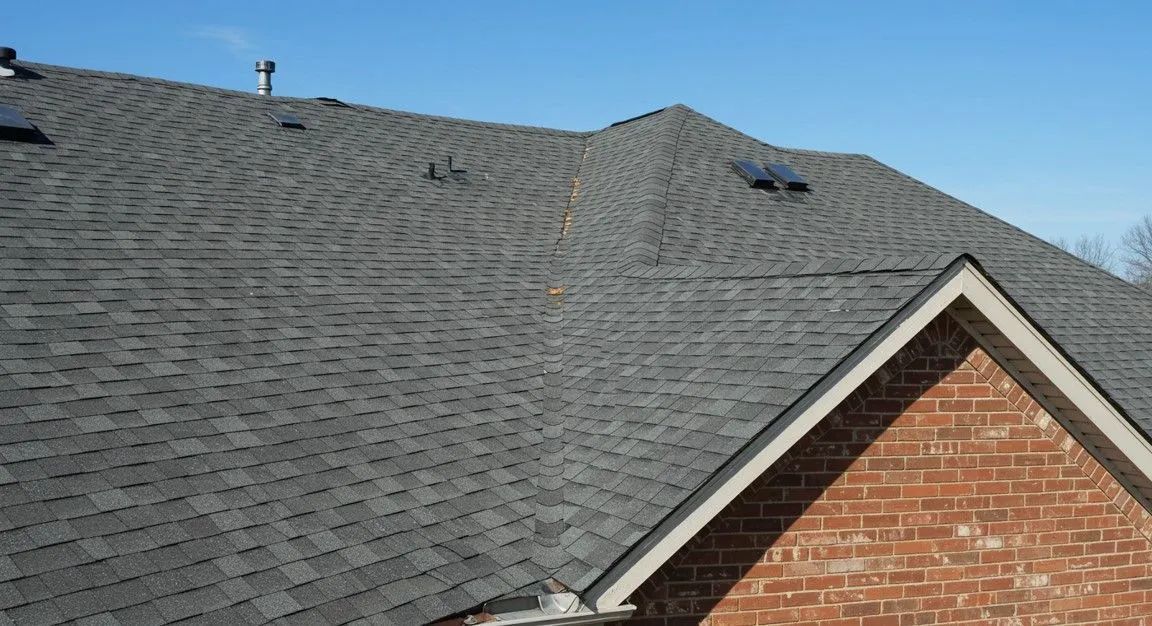
Stand at the edge of your driveway and look up at the roofline on a sunny day. If the shingle edges look like they're lifting away from the roof, or the whole tab looks slightly bowed like a taco shell, you're looking at curling. Roofers usually describe two flavors of it. Clawing is when the edges stay flat, but the middle of the shingle rises, almost like a fingernail digging in. Cupping is the opposite: the edges lift and turn upward while the center stays pinned down.
Neither one is cosmetic. A curled shingle no longer lies flat against the one below it, which means wind can get a grip on the lifted edge and start working it loose. Water can also slip underneath during a hard rain instead of running off the surface the way it's supposed to. You might not notice a drip inside your house for months after curling starts. By the time you do, the shingle has usually already let go of a fair amount of granule coating and lost most of its protective value.
The regional humidity that makes an Alabama summer feel heavy is the same humidity that keeps shingles from drying between storms. The higher and longer the moisture sits, the faster a small patch of algae becomes a roof full of streaks.
Humidity does the rest
Why Birmingham Summers Are Hard on Asphalt Shingles
Every asphalt shingle roof ages. Heat speeds that process up, and Jefferson County gives shingles a lot of heat to deal with. July runs as the hottest month here, but there's honestly little difference from the middle of June through the middle of August. What sets Birmingham apart isn't just the temperature. It's the humidity that sits on top of it, day after day, without much relief.
That combination matters more than either factor alone. Dry heat bakes a roof. Humid heat bakes it and keeps it damp, which is a rougher combination for the asphalt mat and the oils that keep shingles flexible. Add in the fact that most of the region's summer rainfall comes from scattered afternoon and evening thunderstorms, and you get a cycle that plays out for months: the roof deck heats up under direct sun, a storm rolls through and soaks the shingles, the sun comes back out, and the moisture cooks off. Repeat that enough summers in a row and the asphalt starts to lose its flexibility. Curling is often the first visible sign that it's happening.
Tip: Walk your attic on a hot afternoon if you can stand it. If it feels noticeably hotter than the rest of the house within a minute or two of climbing up there, your ventilation probably isn't doing its job, and that's worth addressing before it accelerates wear on shingles that still have good years left in them.
The Attic Is Usually the Real Culprit
Most curling isn't really about the sun hitting the shingles from outside. It's about what's happening underneath them. A roof deck sits over an attic space, and if that space can't move air properly, heat has nowhere to go. On a 90-degree day, a poorly ventilated attic can climb past 140 degrees. That heat pushes upward into the underside of the shingles at the same time the sun is working on them from above, and asphalt just wasn't built to take that kind of pressure from both directions for years on end.
Moisture compounds it. Warm, humid air from inside your living space naturally rises, and if it finds a way into the attic through gaps around light fixtures, bath fans, or plumbing chases, it condenses on cooler surfaces once the temperature drops at night. Over time, that condensation can cause the roof deck itself to swell slightly, and a deck that isn't perfectly flat anymore telegraphs that unevenness straight up into the shingles sitting on top of it. What looks like a shingle problem from the driveway is sometimes a deck problem you can't see at all.
Balanced ventilation fixes this by giving air a place to enter low on the roof and exit high, so heat and moisture keep moving instead of sitting still. It's not a complicated system, but it has to be sized and positioned correctly to actually work, and a lot of older Birmingham homes were built before anyone paid much attention to that detail.
Stay on a maintenance rhythm
Regular inspections catch a returning colony while still a light haze rather than full streaks. A professional can spot shaded, slow-drying slopes most likely to regrow it, making prevention easier than starting over.
Beyond the Attic: Other Reasons Shingles Curl
Ventilation explains a lot of curling, but not all of it. Age is the simplest cause, and it's the one nobody can really argue with. Every asphalt shingle has a service life, and once it approaches the end of that life, the asphalt loses its oils and starts to stiffen and lift no matter how well the attic breathes. If your roof is pushing past the age where your shingle manufacturer expects performance to taper off, curling across a wide section of the roof is a pretty strong signal that you're looking at general wear rather than one isolated issue.
Installation quality plays a role too. Shingles nailed too high, or nailed with too few fasteners, don't hold their shape the same way properly installed ones do. Shingles laid over an existing layer instead of a fresh, flat deck sometimes telegraph the same waviness we mentioned with attic condensation, just from a different source. And on some roofs, curling shows up in patches rather than everywhere, which usually points to a localized issue like a section with reduced ventilation, a shaded area that stays damp longer after storms, or a spot where a repair years ago didn't quite match the surrounding shingles.
What Happens If You Let It Ride
A few curled shingles here and there won't sink a roof overnight. But the problem tends to compound instead of stay still. Lifted edges catch wind, and once wind gets under one shingle it can peel back its neighbors during the next round of severe weather, which is not exactly rare in this part of Alabama. Curled shingles also shed their granules faster, and those granules are what block UV light from reaching the asphalt underneath. Once they're gone in a given spot, that section of roof ages faster than the rest of it, even if everything around it still looks fine.
Warning: Do not ignore curling that shows up right after a storm with high winds, even if you can't see obvious tears or missing shingles from the ground. Wind can loosen a shingle's seal without fully detaching it, and a shingle that's lost its bond but still looks intact is often the first place water gets in during the next heavy rain.
Left alone long enough, curling shingles stop being a repair conversation and start becoming a replacement one. That's not a scare tactic. It's just how asphalt roofing works. The window where a targeted fix solves the problem is real, but it closes as more of the roof loses flexibility.
Stay on a maintenance rhythm
Regular inspections catch a returning colony while still a light haze rather than full streaks. A professional can spot shaded, slow-drying slopes most likely to regrow it, making prevention easier than starting over.
Repair or Replacement: How to Read the Signs
Not every curled shingle means you need a new roof, and honestly, most homeowners are relieved to hear that. If curling is limited to a small section, if the rest of the roof still has good color and flat, tight-fitting shingles, and if the underlying ventilation issue gets corrected at the same time, targeted repair or a shingle replacement in that section is often the right call. Fixing the cause and the symptom together is what keeps the repair from becoming a repeat visit two summers from now.
Widespread curling across most or all of the roof tells a different story, especially if it's paired with granule loss in the gutters, visible sagging along the ridge or eaves, or shingles that feel brittle rather than pliable when you press on them gently. At that point you're generally looking at a roof nearing the end of its service life rather than a single fixable defect. An honest inspection is really the only way to know for certain which situation you're dealing with, because curling that looks similar from the ground can mean very different things depending on what's happening underneath.
Stay on a maintenance rhythm
Regular inspections catch a returning colony while still a light haze rather than full streaks. A professional can spot shaded, slow-drying slopes most likely to regrow it, making prevention easier than starting over.
What You Can Do This Month
You don't need to climb onto the roof to start gathering useful information. Check your gutters after the next rain and look for a buildup of dark, sand-like granules, which is a companion sign to curling and tells you the shingle surface is wearing down. Take a look at your attic space on a warm afternoon and notice whether it feels stagnant and overheated compared to the rest of the house. Walk the perimeter of your home and look up at the roofline from a few different angles, since curling sometimes shows up more clearly in raking light early or late in the day than it does at high noon.
None of that replaces a hands-on inspection, but it gives you a clearer picture before anyone gets on a ladder. Roofs rarely fail all at once. They send signals first, and curling shingles are one of the more visible ones this region produces.
Frequently Asked Questions
How fast does curling usually spread once it starts?
It varies with the cause. Curling driven by poor attic ventilation tends to spread gradually over one or two more summer seasons as more of the roof deck heats unevenly. Curling driven by age tends to show up across wide sections closer together in time, since the whole roof was installed at once and is wearing at roughly the same rate.
Can curling shingles be flattened back out?
Not reliably, and pressing on a curled shingle can sometimes crack it rather than fix it. Once asphalt loses enough of its oils to curl, it has already lost the flexibility that let it lie flat in the first place. The practical fix addresses what's causing the curling, not the shape of the individual shingle.
Does curling always mean a leak is coming?
Not immediately, but it raises the odds. A curled shingle is more vulnerable to wind and to water finding its way underneath during heavy rain, which is common here for much of the year. Catching it early, before a leak actually develops, is generally far less disruptive than dealing with interior water damage after the fact.
Is curling something I'd notice from inside my house?
Rarely, at least at first. Curling is a roof surface issue, and it usually takes a while before it leads to anything visible indoors like a ceiling stain. That's part of why a periodic look at the roofline from outside is worth doing, rather than waiting for an interior sign to prompt a closer look.
Understanding What Your Curling Shingles Are Saying
Curling shingles are worth paying attention to, but they do not automatically mean the entire roof has reached the end of its life. The pattern, age of the shingles, attic conditions, granule loss, and installation quality all help determine what is happening. In Birmingham, AL, persistent humidity and summer heat can accelerate normal asphalt wear, particularly when attic ventilation is inadequate. Recognizing these signs early makes it easier to separate manageable roof concerns from broader age-related deterioration.
With 15
years of experience, Charitable Roofing
understands how Birmingham's heat, humidity, storms, and changing seasonal conditions affect
asphalt roofing
over time. Some curling may remain limited to one area because of ventilation or installation issues, while widespread lifting often indicates that the roofing materials are simply aging. Looking at the roof as a complete system, including shingles, decking, airflow, and moisture conditions, provides a much clearer picture of its remaining condition and helps prevent small concerns from becoming larger problems.