INSURANCE CLAIMS
Insurance Claim Support, Start to Finish
A hailstorm rolls through, and a week later you’re staring at a claim form with no idea where to start. That’s where most homeowners get stuck. We’ve walked hundreds of families through this exact spot, and the process is a lot less scary when someone who does it every week is sitting on your side of the table.
Charitable Roofing
can inspect and document the roofing damage, provide photographs and a detailed scope of work, and meet with your insurance adjuster when requested. Coverage determinations and claim payments remain between you and your insurance carrier. Once the approved scope is established, our team can complete the restoration professionally and efficiently.
Turning an Approved Claim Into a Roofing Project
Once your claim is approved and you've chosen Charitable Roofing for the work, we help bridge the gap between insurance approval and construction. Most homeowners are surprised to learn that insurance companies often release claim funds in stages rather than all at once. That can leave people wondering how the roof gets started before the final payment arrives.
We make the process straightforward. If financing makes sense for your situation, we can help you finance the Replacement Cost Value (RCV) needed to complete the project. As your insurance company issues each portion of the claim payment, those funds are applied toward the financing. In most cases, your only out-of-pocket responsibility is your policy deductible, while the remaining balance is satisfied using the insurance proceeds provided under your claim.
Our team explains each step before work begins, reviews your insurance paperwork with you, and makes sure you understand when payments are expected and how they are applied. That way, you don't have to delay replacing a storm-damaged roof simply because the insurance company hasn't released every portion of the claim yet.
Storm Damage Is the Reason Most Claims Exist
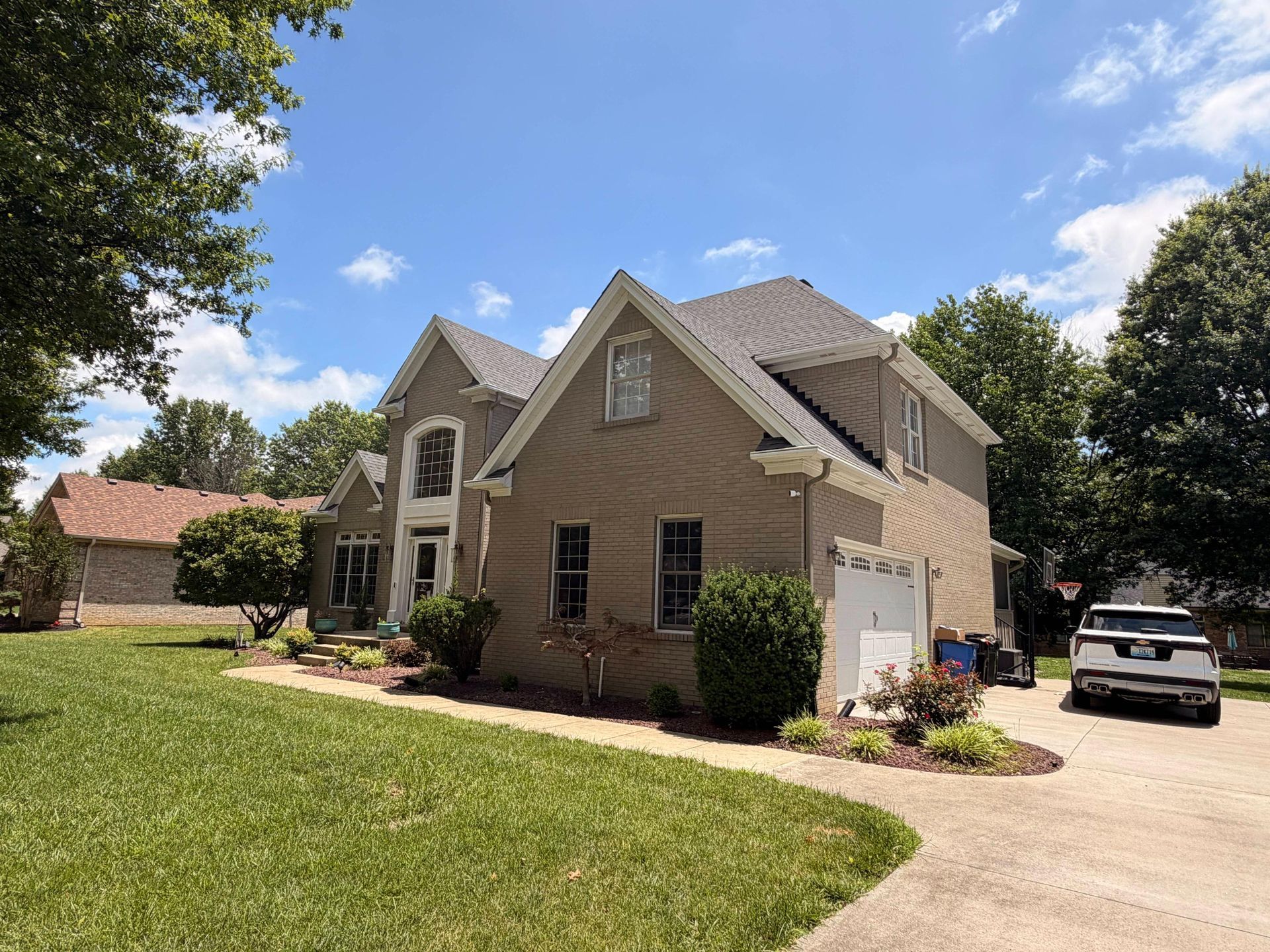
Wind and hail do the quiet kind of damage. From the ground your roof can look fine, and that’s the trap. A hailstone the size of a quarter bruises the shingle, knocks the protective granules loose, and leaves a soft spot that won’t leak today but will in eight months. By then the storm date is old news to your insurer, and the claim gets harder.
Here’s what actually happens up there. Hail cracks the shingle mat and strips granules, so the asphalt underneath starts baking in the sun. Straight-line winds lift shingles at the edges and snap the seal strip, which is what keeps rain from driving underneath. You might spot a few shingles in the yard after a storm, or find little black dots of granule wash collecting at the bottom of your downspouts. Both are signs worth a closer look.
Alabama and the rest of the Southeast sit in a rough stretch for this. Spring storm season brings hail, and the same fronts that drop it also carry the wind that finishes the job. If a real storm passed over your neighborhood, get the roof checked while the damage is fresh and the date is easy to prove.
How a Roof Claim Actually Works
Most people think a claim is one phone call and a check. It’s more like five steps, and the order matters. Skip one and you can leave money on the table or get the whole thing denied.
It starts with an inspection to confirm there’s real, storm-related damage worth filing on. Then you file the claim and your insurer sends an adjuster. We can meet that adjuster on the roof when requested, and walk the damage together so nothing gets missed. If the first estimate looks short, we can help you document what may have been overlooked so you can raise it with your carrier. Once it’s approved, we build the roof and do a final walkthrough with you.
You don’t need to memorize all of that. You just need to know the shape of it so nothing catches you off guard. We tell you what’s coming at each step, what we need from you, and roughly how long it’ll take. No jargon, no runaround.
One thing worth saying plainly: you pay your deductible, and that’s it. If a contractor offers to “eat” or “waive” your deductible, walk away. That’s insurance fraud in most states, and it puts you on the hook.
It Starts With an Honest Look at Your Roof
Before anyone files anything, we get on the roof and see what’s really there. This inspection is free, and it’s honest. If your roof took a beating, we’ll show you the photos and explain what they mean. If it didn’t, we’ll tell you that too, and you’ve lost nothing but an hour.
We check the field of the roof for hail bruising, look at the ridge and edges for wind lift, and inspect the flashing around chimneys and vents where leaks usually start. We photograph everything, mark the hail hits, and note the storm date. That photo file becomes the backbone of your claim. Adjusters move faster and argue less when the damage is already documented in front of them.
A lot of homeowners file a claim before they know what they’re filing on. That’s backwards. A denied claim can still count against you, so it pays to know you’ve got real, provable damage first. We give you that answer straight, before you ever call your insurer.
We Can Meet Your Adjuster on the Roof
The adjuster visit matters, and most homeowners face it alone. When requested, one of our team can be there, on the roof, walking the damage with the adjuster point by point.
Why does that matter? Adjusters are fair, but they’re moving fast and they cover a lot of roofs in a day. Things get missed, especially soft hail hits and edge damage that’s easy to overlook from a standing position. When we’re up there together, we can point out every mark and share our measurements and documentation. Coverage determinations and how the report is written remain your adjuster’s and carrier’s call, but two sets of eyes catch what one set walks past.
We also speak the adjuster’s language. We know how they scope a roof, what codes apply, and what documentation they need to approve line items. That keeps the meeting short and the estimate accurate.
When the First Estimate Comes Up Short
Sometimes the adjuster’s estimate misses things. It happens more than you’d think, and it’s rarely on purpose. A drip edge left off the scope, a code upgrade the estimate didn’t account for, ventilation that has to be brought current when the roof is replaced. That gap is what a supplement fixes.
A supplement is a formal request a homeowner or contractor can submit to add what was missed to an approved claim. We can document the overlooked item, tie it to code or to the manufacturer’s install requirements, and provide that documentation for you to submit to your insurer. The goal is simply making sure the scope reflects what the job actually requires to be done right and to code.
This is the part homeowners almost never handle well on their own, because you’d have to know what’s missing to ask for it. We already know. It’s the difference between a roof that’s half-covered and a roof that’s fully paid for.
Getting to “Approved”
Once the scope is right, the claim gets approved and your insurer sets the numbers. You’ll see a few terms on that paperwork, and they trip people up, so here’s the plain version.
Replacement Cost Value, or RCV, is what it costs to replace your roof today. Actual Cash Value, or ACV, is that number minus depreciation for the roof’s age. Most policies pay you in two parts: the ACV up front, then the rest of the depreciation once the work is done and invoiced. Your deductible comes out of the total, and that portion is yours to pay.
We sit down and read the approval with you so you know exactly what your insurer is paying, what you owe, and when each piece lands. No surprises at the end. If something on the paperwork doesn’t add up, we catch it before the work starts, not after.
Building Your New Roof
With the claim approved, the fun part starts, at least for us. This is the roof itself. We order premium material from GAF and Owens Corning, schedule around your calendar, and put an experienced crew on the job.
A typical home takes one to three days. We tear off the old roof down to the deck, check the wood underneath for rot or soft spots, and replace anything that won’t hold a nail. Then we lay new underlayment, install your shingles or metal, and rebuild the flashing and ventilation so the whole system works together. Your landscaping gets protected, and the job site gets cleaned every single day, not just at the end.
A project manager stays reachable the whole time, so if you’ve got a question you’re not chasing a voicemail. And because this is Charitable Roofing, your project helps someone else too. Through Project New Roof™, Charitable Roofing sets aside 1% from every completed roofing project to help provide a new roof for a deserving homeowner experiencing hardship.
The Last Look Before We Call It Done
We don’t consider the job finished until you do. When the roof is on, we walk it with you, top to bottom. This is the final walkthrough, and it’s where we prove the work holds up.
We check the shingle lines, the flashing seals, the ventilation, and the ground around your house for stray nails and debris. You’ll get your warranty paperwork in hand, both the manufacturer’s material warranty and our workmanship warranty, so you know exactly what’s covered and for how long. We also hand off the final documentation your insurer needs to release the last of your funds.
Then we answer whatever’s left on your mind. Months down the road, if something ever looks off, you call us and we come back. Our workmanship warranty and the manufacturer’s material warranty both come with a phone number that a real person answers.
FAQs - Frequently Asked Questions
Does filing a roof claim raise my rates?
A single storm claim usually doesn’t, because storm damage is an “act of nature,” not something you caused. What raises rates is a pattern of claims over time. If you’ve got real hail or wind damage, filing is what your policy is for. We’re glad to look before you file so you know it’s worth it.
How long do I have to file after a storm?
Most policies give you a window, often a year, sometimes two, but sooner is always better. Fresh damage is easy to tie to a specific storm date. Wait too long and your insurer can argue the damage came from wear or a later event. If a storm hit your area, get the inspection done in the next few weeks.
What if my claim gets denied?
A denial isn’t always the end. Adjusters miss damage, and estimates come back short. We can request a re-inspection, document what was overlooked, and file a supplement with the proof attached. Plenty of “denied” roofs end up approved once the real damage is on paper.
Do I have to pay anything upfront?
Your deductible is your only out-of-pocket cost, and you pay it as part of the project, not before. The inspection is free. Anyone offering to cover or waive your deductible is breaking the law, and it can come back on you, so steer clear.
Can you work with any insurance company?
Yes. We’ve worked with just about every major carrier and plenty of smaller ones. The process is the same across the board: document the damage, meet with the adjuster when requested, help identify anything missing from the scope, and build the roof once it’s approved. We’re glad to support you through that process from start to finish.
Storm Damage Doesn’t Wait. Neither Should You.
Get a free, no-pressure inspection from a team that supports homeowners through the insurance process every week. We’ll tell you straight whether you’ve got a claim, and if you do, we’re with you from the first photo to the final walkthrough.